Christina Candidates:

Term expires June 30, 2015
George E. Evans
Eric M. Anderson
Paul J. Falkowski
Who Votes:
•Are a U.S. and Delaware citizen;•Are 18 years old; and
•Live ANYWHERE in the Christina School District
When and Where:
People may vote at any Polling Places from 10 a.m. until 8 p.m. on Tuesday, May 11th.
Bancroft Elementary School
700 N Lombard St Wilmington 19801
Bayard Elementary School
200 S duPont St Wilmington 19805
Brookside Elementary School
800 Marrows Rd Newark 19713
Christiana High School
190 Salem Church Rd Newark 19713
Downes Elementary School
299 Casho Mill Rd Newark 19711
Elbert-Palmer Elementary School
1200 Lobdell St Wilmington 19801
Gallaher Elementary School
800 Brownleaf Rd Newark 19713
Glasgow High School
1901 S College Ave Newark 19702
Jones Elementary School
35 West Main St, Christiana/Newark 19702
Keene Elementary School
200 LaGrange Ave Newark 19702
Maclary Elementary School
300 St Regis Dr Newark 19713
Marshall Elementary School
101 Barrett Run Rd Newark 19702
McVey Elementary School
908 Janice Dr Newark 19713
Newark High School
401 E Delaware Ave Newark 19711
Quaker Hill Place Apartments
200 N Washington St Wilmington 19801
Shue-Medill Middle School
1500 Capitol Trail Newark 19711
Wilson Elementary School
14 Forge Rd Newark 19711
Category:
0
comments


Dear Christina,
Elections are looming. A referendum is in our midst. Teachers have been RIF'd. An A.G. opinion supports a FOIA petition. Program cuts are real and our students have walked out.
It's time to lay the cards on the table.
How about we start with some grandstanding; it's the word of the day in the blogosphere. I've tried to walk the high road in this political nightmare, sticking to transparency and honesty.
But, recently, a candidate for Christina's school board pulled me into the election. It wasn't the FOIA that he targeted, though I would not have blamed him if he did, it directly involved his judgment as board president. It was this blog and others like it. Precisely, it was this statement, "I don't think I'm running against Eric Anderson for re-election, I'm campaigning against John Young and Elizabeth Steinberg." The issue: the blogs and the idea that if you arrive at the same conclusions as those vocalized on Transparent Christina or Children & Educators First, then you are unable to think for yourself.
Flip the logic on it's head: It's the equivalent of denouncing those who rubber stamp every vote that comes before them as board members on a stage. The truth: every vote is sacred, and each board member arrives at theirs through their own personal means. And some put that logic to the public in the interest of transparency. I do not ever lay a vote on the table without having arrived at it 10 ways to Sunday, or in this case, 10 ways to Mother's Day. There have been close ones, painful ones, like the decision to dissent on the CLEAR Review, a tool I believe will benefit our district, but came with a hefty price tag and a groundswell of concern from parents and teachers. We could have handled it differently, bringing the issue to the public for comment and debate. We didn't and the result is haunting. We've approved a strategic plan that in places relies heavily on the results of that review, yet unknown. It reminds me of something I read recently regarding the perception by students of bullying and fighting in schools: The winner goes to the office, the loser goes to the nurse.
For too long, Christina has been on the losing side of an education battle. We live in triage. Well before Joe Wise crippled the district, Christina was fighting rising drop-out rates and achievement gaps. The DSTP made it evident, No Child Left Behind made it news, and Joe Wise put it on the front page. Despite it all, we have had teachers on the front lines, in many cases fighting poverty and despair, struggling to undue 16 hours/day of neglect and blight, in 8 hours of educational intensity.
Christina has struggled to rise above it's financial nightmare. Really, it was and is a nightmare. They were forced to turn to the state for a loan and have been solvent in repayment according to the five year terms. Our final payment comes due next year. I can argue for more transparency, but I can also assure you, our constituents, that Christina has been responsible in repayment. This I thoroughly believe. I can find no documentation to contest it and every document to support it.
But, what's the purpose of talking about loans when we are laying off teachers? Because there is a misconception and our children are impacted by it. Today, I read a letter in the News Journal, taking my district to task for cutting text book funding to help mitigate the very real deficit. In fact, the state has offered two peas in the way of funding for books for years. The majority of money that buys books comes from the local share of school taxes. If the local share must go to operating buildings, energy costs, and payroll for those very valuable teachers that we are struggling to keep, then something must go. Textbooks? Truth: Christina cut out a lot of "fat" when Wise toppled the finances. Is there still fat? Maybe. But, not enough to save 43 teachers. That much, I believe. As far as books, our district has not been able to afford to purchase books, aside piecemeal, for years. Those who have children in our district know that. And they know it, because few if any children bring those books home.
Very real story: My daughter struggled with reading this year. Those who read my blog know that I do not often bring my own children into the political story of Christina. And sometimes, I don't have a choice. My daughter started her year in a regular reading class. In early fall, she was pulled back to her special ed classroom's small reading group because she was falling behind. I begged, pleaded, and argued for her text to come home so that I could work with her. The answer was "no." During winter, her IEP rolled around and it took an administrator from her program to call down the guard and concede the book. Why the fight? The fear that dictates it's too expensive to send a book home and not get it back. The concern that books are no longer in publication and therefore cannot be replaced is very real. Meanwhile, my daughter has continued to learn at a slower pace. She's learning, but way behind her typical peers. Do I blame her team? her school? No. If I had to pluck someone out of the air to blame, it would be Dr. Wise. Myself, I'm a close second. If a school board member can't get the book home, then what does that say about the plight of our parents at large?
The truth: a referendum will provide for the textbook or technology purchase needed to put supplies back into our students hands. The next truth: the suggestions I've made to our administration, the requests, and questions, would likely not amount to enough money to keep us floating. I concede this, but it does not mean that I am done asking for those efficiencies. I highlight this because I believe we need to continue our fight for change in Christina, for openness, and accountability. The nearing election, Tuesday, May 11th, provides the next opportunity for voters to voice their opinions.
I've called Christina's a "Board in Transition." Five years later the sitting board is still in transition from the dark days of Wise and the events that have caused those very real and painful votes the members of the board have had to voice. But, there's another transition afoot, one I've talked about in past posts -- transparency and accountability. Though the lesson comes from a piece on Mayoral control of education (you don't like your mayor's decisions, you vote him out after four years.) When a school board leads, it takes 5 to 7 years and sometimes longer to change a board with whom whose decisions you do not agree (due to the duration of terms.) I believe I was elected to help steer the leadership in Christina in a new direction. I certainly did not run because I was happy with the course that had been charted for my own children and their peers.
And by laying my cards down and making these statements, I know that I am not strengthening relationships with some board members. But, the night the pathetic semblance of my name, and my blog, were used to disparage another candidate, changed the dynamic. A non-blogging Delaware board member, whom I hold high regard, put it to me this way: You have nothing left to loose. They won't work with you anyway.
It's been five years since the news about our finances first broke. Christina's transition is well entrenched. It started before me and I hope has been accelerated by the decisions I have made. To those fighting it: you are only fooling yourselves. If nothing else is gained by this post, the constituents will know that someone is LISTENING. Their voices ARE being heard.
Today, unceremoniously as it is, I break the unspoken pact of boardmanship. I will join the ranks of two others who have, for their own various reasons, publicly endorsed candidates in their district's elections. I am not the first and I don't deserve any praise for it. In fact, I expect a backlash from those whose first instinct is to be wary of change.
Today, I put my support behind Eric Anderson, a former Christina teacher, who I believe has the best interest of our district at heart. Our current board is enjoined by parents of children in the district, both elementary, secondary, and served by special education and special programs. There are a combination businessmen, stay-at-home parents, and a member whose children graduated from the district some years back. But, we lack a crucial partner -- an educator. I believe that Eric is that educator whose insight is desperately needed in the decision-making process to guide Christina to success. And with Eric as an elected partner in the process, I believe that a successful referendum will be the next step to creating a financially-sound Christina.
Today, I urge you, Christina, to get out the vote on Tuesday, May 11th, and again, make your voices heard!!! I will lend my vote to Eric Anderson. I hope you will do the same.
Sincerely,
Elizabeth
Category:
4
comments
Coaching of Teachers Found to Boost Student Reading
By Debra Viadero
Denver
An innovative study of 17 schools along the East Coast suggests that putting literacy coaches in schools can help boost students’ reading skills by as much as 32 percent over three years.
The study, which was presented here on May 1 during the annual meeting of the American Educational Research Association, is as notable for its methods as for its results. It’s among the first of what many scholars hope will be a new generation of studies that offer solid clues not only to what works but also when, under what conditions, and to some extent, why.
The study finds that reading gains are greatest in schools where teachers receive a larger amount of coaching. It also finds that the amount of coaching that teachers receive varies widely and is influenced by an array of factors, including relationships among staff members and how teachers envision their roles.
“This shows that this initiative can build networks and build social capacity in schools, and you can actually measure these things,” said Anthony S. Bryk, who led the four-year study with current and former Stanford University graduate students. He is currently the president of the Carnegie Foundation for the Advancement of Teaching, which is located on the university’s campus in California.
The study, which was paid for by the federal Institute of Education Sciences, focused on the Literacy Collaborative, a program developed by researchers at Ohio State University in Columbus. Used in more than 700 schools nationwide, the program trains teachers to become literacy coaches, who then work one-on-one with their colleagues on a half-time basis to spread a set of teaching routines drawn from principles of cognitive science.
Teachers in Literacy Collaborative classrooms might, for example, help walk students through decoding processes as they read aloud or lead children in groups as they read progressively more-difficult texts.
Value-Added Approach
The researchers tracked the implementation of the program in K-2 classroom in 17 schools. The total number of 8,520 students included in the study represented a mix of social and economic characteristics. For example, even though 45 percent of the students in the total sample came from low-income families, the percentages of students in each school who qualified for federally subsidized school meals—a commonly used indicator of family poverty—ranged from a low of 19 percent to a high of 86 percent.
To calculate the program’s learning impact, the researchers used value-added techniques to compare students’ progress on various reading-related tests and tasks with how much students would have been expected to gain on those measures with more-typical instruction.
They found that students’ reading skills grew 16 percent beyond predicted levels the first year, 28 percent more than expected by the second year, and 32 percent more than predicted by the third year.
But, as with many school improvement measures, the results varied widely from school to school, and even more from teacher to teacher within the same schools, said Gina Biancarosa, an assistant professor of education at the University of Oregon, in Eugene, who co-authored the study with Mr. Bryk, along with Allison C. Atteberry and Heather J. Hough, both doctoral students at Stanford University.
One explanation for that variation, the researchers learned, was coaching. Teachers and schools that experienced more coaching sessions tended to spur bigger learning gains in their students. Some teachers received no coaching over the course of the study, while others had as many as 43 sessions.
The teachers who got the most coaching were new teachers, teachers committed to the school and the reform model, and those who were found, through baseline surveys, to be more likely to initiate work-related interactions with other teachers.
“So in some ways, coaching is a voluntary activity,” Ms. Atteberry said.
MORE HERE
Category:
2
comments
http://www.delawareonline.com/article/20100507/NEWS03/5070383
By EDWARD L. KENNEY • The News Journal • May 7, 2010
Voters in the state's largest school district will choose among three candidates for the District A seat in Tuesday's election.
Longtime Christina School Board member and current President George Evans faces challenges from opponents Eric Anderson and Paul Falkowski.
Evans, 62, a lawyer who lives in Wilmington and has served on the board for 29 years, said he supports passage of the almost $19 million referendum May 25 that is intended in part to offset an $8.1 million shortfall. The district can ill afford to take such a hit, he said.
"I am also a strong supporter of safe schools conducive to learning, sound fiscal management and full-day kindergarten," he said. "We are seeking to achieve that with the referendum.
"Equality for all of our students is what I'm seeking to achieve," he said. "A major part of that is closing the achievement gap and placing highly qualified teachers at all of our schools, and to prepare all of the students for career readiness and higher learning.
Anderson, 26, a math teacher at The Charter School of Wilmington who also lives in the city, is running for his first elected office.
"I support the referendum, and I believe there is no way the schools can operate with less," he said. "It's an operating referendum, so it's there to keep teachers in the classroom, and I'm 100 percent behind that.
"And I believe transparency is an issue, communication," said Anderson, who taught in the Christina School District for about seven years. "I believe the board hasn't been transparent enough in regard to the finances and the direction of the district. There hasn't been enough community outreach, not on the district level."
Falkowski, 61, of Wilmington, teaches math at James Groves Adult High School. He ran unsuccessfully for the Christina School Board five years ago.
He also has worked as a computer programmer who advanced to systems analyst in various industries, and he believes that would help him bring an analytical process to the board.
"The top issue for me is recognizing that teaching happens in the class, and everything else should support the teacher in the classroom," said Falkowski, who co-founded the Browntown Community Association in 1989.
"The reason I support the referendum is they need the money," said the retired Army infantry officer. And, he added, "we need new representation on the board to make sure we don't make the same mistakes from the past."
Polls will be open from 10 a.m. to 8 p.m. Tuesday.
Contact Edward L. Kenney at 324-2891 or ekenney@delawareonline.com
Category:
0
comments
http://www.delawareonline.com/article/20100507/NEWS03/5070387/Future-uncertain-for-state-s-teachers
At the root of this fight is a $21 million decrease in federal stimulus funding, which has forced districts to scramble to meet budget shortfalls.
Ann Visalli, director of the state's Office of Management and Budget, said state officials have encouraged superintendents to trim administrator positions and eliminate duplication of services.
"I have been pretty clear with the chiefs that we don't want this to affect the classroom," she said
"We did the dirty work," Mackenzie said. "We had to [lay off] friends and neighbors -- members of our own community."
Christina is holding an operating referendum on about $19 million on May 25. If it passes, some of the employees could be hired back, district officials said.
Visalli specifically questioned Christina's layoffs.Check out the whole story here: http://www.delawareonline.com/article/20100507/NEWS03/5070387/Future-uncertain-for-state-s-teachers
"Christina should have enough money to keep those teachers on," she said. "I would be hard-pressed to say this would be the only option that they had."
Category:
0
comments
I dropped this comment on Kilroy's Delaware earlier today in response to a comment thread there. I think it's worth sharing with my own readers. But, here's the thread at Kilroy's so that you can get the context: http://kilroysdelaware.wordpress.com/2010/05/05/christina-school-board-eye-gouging/
Kilroy,
I think this all really amounts to Christina being a “board in transition.” Intense cultural change doesn’t happen overnight and it frequently comes with pushback as described by Patrick Lencioni in his best seller, “The Five Disfunctions of a Team.” Not a thriller, but the message gives me hope that at the end of this road, Christina will emerge stronger, more cohesive, and strategically placed to achieve success for our students.
There’s no proven road map for change, even Mass Insight admits that; however, we have to flip the question around and start asking, how do we save teachers? Not how do we cut personnel osts? Something has to give. The deficit appears real to me, regardless of how we got there. But, when eliminating your one Latin teacher in the only Latin program in the district, leaving students in midstream unable to attend the local university b/c their admission standards demand 4 consecutive years of a single language, the action is simply unacceptable. Our administration could not make promises that they would be able to bring in a part-time employee to fulfill the students collegiate needs. With the deadline that was still 11 days away, there was still time to rethink some of our options.
I was also unhappy to learn that our board and administration does not think it appropriate for the board to vote on the elimination of programs, such as the arts, in our schools. That’s micro-managing, we’re told.
It was not offered to the board Tuesday night that these 43 units were eliminated due to attrition. And if that is the case, it illustrates the problem of information not being shared universally with all board members.
These are examples, directly from Tuesday's meeting, that illustrate the type of barriers affecting Christina’s students. It’s just the surface but indicative of the deep directional shift we need to engage in order to have finally righted the ship that the Wise era capsized.
And if that’s showboating, so be it.
Category:
0
comments
Okay, last night, I'll be honest, things were a bit chaotic. The beginning of the board meeting was a wonderful tribute to those who have given to the district's students, going above and beyond and frequently without recognition.
And from there it all went down, down, down hill. As usual, I'll post my disclaimer, these are my thoughts and mine alone. They do not represent the opinion of the CSD board or its administrators, now do they constitute minutes in any fashion.
Last night, I voted no to Rif our teachers. I was among those who were accused of being fiscally irresponsible and cowardly. I do not believe that I am either. I understand that the failure to pass the motion to reduce our teaching staff would have resulted in a budget expenditure that this district may not be able to sustain, and perhaps forcing us back into the nightmare days following Joe Wise.
I would offer this regarding my vote: A Fiscally Irresponsible board is what led us to bankruptcy during the Wise era. They failed to ask the right questions and provide the oversight dictated by the function of the board. We are still repaying the state loan that kept our district afloat.
CSD may have done everything right once the deficit was discovered. They may have managed their funding with diligence. And we cannot escape the effects of the economy on a district that going on 8 eight years without a successful operating referendum.
However, we can
1) Send a message to our folks in Dover that we, along with many other districts, desparately need the legislature to restore funding that our Governor and the Sec. of Education has proposed to be eliminated. We can appeal that funding for reading and math specialist, eliminated in the last budget cycle, be restored to the education budget. We can proactively correspond as a board with our legislators to educating them of reality of the budget cuts in our classrooms. Essentially, we can LEAD the charge to Dover that Education must be a PRIORITY!
2) Share the burden of the budget through a RIF process that includes district level administration. If we are to be 160 employees lighter next year (representing the 40 + eliminated last night in addition to the 120 temporary contracts that we cannot afford to renew) then perhaps we will require fewer Drew level support employees.
3) In a year that included the CLEAR Review (yet unseen by the board) and a promise from our superintendent that there would be no new programs this year so that we can evaluate which program work and which do not, this RIF could have been supported by documenting which programs DO NOT achieve the DESIRED results, instead of targeting Arts, Specials, and Languages.
4) Spread the cuts beyond the classroom, languages, and arts, to Athletics.
5) Eliminate some of our spending on Travel and Consultants. The fact is that we have a checkbook that's heavy with consultants.
6) Approach the state and ask to defer the loan payments until such time as we successfully pass an operating referendum.
What's the worse that can happen? They say No. But, you don't know until you try!
I have repeatedly raised these concerns regarding our budget and the difficult choices that we must make for our schools. And I have been rebuffed and ignored. My suggestions have not been taken into consideration by our administration nor have they been respected by some board members.
Essentially, we could have made good on a promise to constituents to protect the classrooms, to support programs that work, that are best practices, and that support acheivement. My vote was not cowardly or irresponsible. And though I am in no way advocating violating spending laws mandated by the state and federal government, I am soundly suggesting that we need to insist that the state stop sending Boards to the perp walk, and boldly Lead the state in funding reform.
At the end of the day would any of these suggestions save a single job? I don't know. But, we didn't try. And that's why the only vote I could offer was No. No, to Dover, we do not support you in devaluing education. No, to our administration, we do not support centering cuts to teachers. No, we insist you make good on the message your sent to our constituents in September, October, and November.
At the end of the day, the motion carried.
Category:
4
comments
Latest from the News Journal:
http://blogs.delawareonline.com/delawareed/2010/05/03/ags-office-board-failed-to-follow-foia/
NJ article contains links to FOIA Petition, District Reponse, and AG Determination.
CSD's response to A.G. FOIA Petition
http://blogs.delawareonline.com/delawareed/files/2010/05/Boardrespond.pdf
“Three things cannot be long hidden: the sun, the moon, and the truth.”
Buddha quotes (Hindu Prince Gautama Siddharta, the founder of Buddhism, 563-483 B.C.)
Category:
1 comments
Monday
Board of Education
Agenda Preparation Meeting
12:00 pm
Drew Education Center
Tuesday
Board of Education
General Business Meeting
7:30 pm
Newark High School
Board of Education
Agenda Preparation Meeting
12:00 pm
Drew Education Center
Tuesday
Board of Education
General Business Meeting
7:30 pm
Newark High School
Category:
0
comments
Dear Christina Constituents,
In a few hours C&E 1st will go on hiatus for three days as I hit the wilderness with my girl scout troop. Before I go, I want to address an article in today's News Journal, Delaware schools: Christina board violated FOIA, AG's Office rules.
In March, I found myself in a difficult place. The board had convened a public meeting that in my opinion was not properly noticed in accordance Delaware State law. The night before the meeting, a fellow board member brought the omission of the Agenda from the posting to my attention. On the morning of March 6th, I attended the board meeting at Sarah Pyle Academy and shared my concerns. I presented a copy of the state's code on open meetings and Delaware's Freedom of Information Act to our board president. He briefly considered the documents and determined that the meeting was "legal."
The meeting was called to order. After the Pledge of Allegiance, I re-iterated my concerns with the appropriateness of the meeting and informed those in attendance that I would not stay and participate. I have been committed to transparency since I began my campaign more than a year ago. I was elected to position on that platform and will not deviate from my core values. Participation in this meeting would have constituted both a personal moral and ethical violation.
The meeting was conducted at the president's direction after I departed.
At the regularly scheduled March meeting, our president offered comments regarding the departure of a board member at the previous meeting. It became apparent to me that the culture that sustains our district is one in which transparency is not clearly understood and that deficit is reflected in all of our actions. I believed that the only place to turn for an accurate interpretation of the state code was the Office of the Attorney General for a Freedom of Information Act finding.
The FOIA reflected two concerns: 1)The proper posting of the March 6th meeting and 2) The lack of minutes for the on-going Agenda Prep meetings held prior to the regularly scheduled monthly board meetings. In March, I, along with another board member, co-submitted a FOIA petition on behalf of the voters of the Christina School District to the A.G. The findings were recently released and can be found on the A.G.'s website at http://attorneygeneral.delaware.gov/office/opinions/2010/10-IB04.pdf
The Attorney General's Opinion supports the FOIA Petition. Our Board of Education was found to have incorrectly interpreted the code and as a result, has held questionable meetings. The A.G. does recognize that the board did not vote or take any other action during the meetings that were the subject of the FOIA.
For many, the above chain of events will evoke anger. It did for me, for a number of reasons. But, I am more concerned for the district's constituents, that they have historically been shut out of process and lost their opportunity to have a voice on policy in times when it has been direly needed. There are some that support the "old guard," who will be angry that I or any other board member rocked the boat. They will argue that this was not a matter that should have gone before the A.G. and that I am part of a rogue gang of board members who have a secret agenda. I know this because in recent weeks those rumors have made their way back to me.
I assure you that I am neither a "rogue" board member nor do I have a "secret" agenda. My agenda has been very public from day one: I seek to create transparency and ensure accountability in our best efforts to provide a world class education for all students. I will go to the ends of earth -- and the A.G.-- to ensure that I have maintained that effort.
Had the A.G. found for the district, I believe that I would feel the same satisfaction, in knowing that I had engaged process to ensure that we were following both the letter and the spirit of the law. This was a necessary step to ensure that our actions support our assertions. I am a passionate advocate for open government and true democracy and as such I have included the FOIA petition submitted to the Attorney General in tab, labeled Pages, to the right of this post. It is my hope that you will draw your own conclusions about the appropriateness of these meetings, the filing of the petition, and the A.G. Opinion.
Ultimately, I am satisfied with and saddened by the outcome. I admit to being a part of meetings (Agenda Prep) that were not in compliance with the state code. I bear that responsibility and have taken the necessary action to rectify it, through this FOIA petition. I continue to be troubled by what appears to be a history of such meetings and I cannot tell you (having only been on this side of the board for 10 months) how many such meetings have occurred in the last thirty years.
Accidental as it may seem, it's ultimately a sad chain of events. It is, however, a necessity, as in my opinion, we as both a district and a board are without the ability to change erroneous behavior if we do not acknowledge it.
Sincerely,
Elizabeth Scheinberg
Category:
Adapted Physical Education,
Attorney General,
Christina School District,
Constituents,
DEDOE,
Delaware,
Delaware Department of Education,
FOIA,
Freedom of Information,
Sunshine,
Voters
2
comments
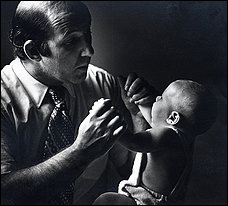
It's been a while since I recapped a board meeting on C&E 1st... I actually like these opines, it's an opportunity for me to reflect on direction, determinations, frustrations, and facts. D's and F's. Reminds me of the report cards we used to issue to students. These days the report cards look more like GPS coordinates, something akin to geocaching. Half the parents I've met admit they don't bother to read them anymore because they can't make heads nor tails of them. It's a sad statement, but a running theme, we've over complicated a system that should have been transparent from the beginning. But, I've digressed from the topic at hand, public board meeting recap.
But, before I get started, the usual disclaimer: These are not to be construed as official minutes or minutes in any manner, but rather, the thoughts, ramblings, and opinions of a member from the stage. These are my thoughts and mine alone. They do not represent the board or district. I think that about covers it.
Christina's Board held its most recent public meeting April 20th at Keene Elementary. A number of nuanced events transpired beginning with the minutes. Two sessions lost their titles as Special Session, one became a Workshop, the other a Regular Session. The minutes of the March 6th meeting were pulled prior to approval to come before the board at a later date.
Action Item A. Extension of Negotiated Bargaining Agreement was pulled from the agenda prior to approval of the agenda.
The Board voted 4-3 in favor of accepting the Strategic Plan. I dissented because much of the strategic plan relies on the results of the CLEAR Review; however, that process has not been completed thus the results have not come before the board for review. I could not in good faith approve a plan without studying the supporting documentation cited by the plan.
The Board held its first reading of the 2010-11 Code of Conduct, heavily altered from the previous year's Code. It's available for review on the district website as is the Strategic Plan. The Code will come to the board for a second reading in May for final approval.
As our regular meetings wrap, this one ended with Board reports on various travel, meetings, and seminars attended by members, some near and some far.
I'll leave you with this thought tonight: It's 1:47 am, do you know where your board members are?
Category:
1 comments
Kentucky Parents Win Records Access
Parents have an “absolute right” to inspect all educational records relating to their children, including e-mails exchanged between teachers and administrators, the Kentucky attorney general’s office has concluded.
The issue arose when Jonathan Sholar, of Princeton, Ky., sought access to all records pertaining to his daughter, whether hard-copy or electronic. The Caldwell County school district refused the request.
"Mr. Sholar possesses an absolute right to inspect any and all educational records, including the requested communications, relating to his daughter,” Assistant Attorney General Amye L. Bensenhaver wrote in the April 12 opinion. “The district’s refusal to disclose these records to him constituted a violation of the Open Records Act.”
Superintendent Carrell Boyd of the Caldwell County schools said he will abide by the attorney general’s opinion and give Mr. Sholar access to the information he seeks.
More Here: http://www.edweek.org/ew/articles/2010/04/28/30policy.h29.html
Category:
1 comments
http://www.delawareonline.com/article/20100427/NEWS03/4270330/Young-educators-in-spotlight
Category:
0
comments
Region III PTA is hosting a candidates' forum for the public to meet and ask questions of the three candidates running from nominating district A for the Christina Board of Education. All district residents are eligible to vote in the May 11th election.
Bancroft Academy, Wilmington, Monday, April 26 @ 6:30 PM
Downes PTA is hosting a meet the candidates night on Wednesday, May 5 @ 6:30 PM.
All are welcome/encouraged to attend.
Bancroft Academy, Wilmington, Monday, April 26 @ 6:30 PM
Downes PTA is hosting a meet the candidates night on Wednesday, May 5 @ 6:30 PM.
All are welcome/encouraged to attend.
Category:
0
comments
RTTT Judges Reviewed...Kinda...
Ed. Dept.'s 'Soviet Judges' Review of Race to Top Scores
By Michele McNeil on April 22, 2010 12:41 PM
1 Comment
No TrackBacks
Ed. Dept.'s 'Soviet Judges' Review of Race to Top Scores
By Michele McNeil on April 22, 2010 12:41 PM
1 Comment
No TrackBacks
There's been a lot of talk about how fair the scoring was in the first round of Race to the Top. Did reviewers follow the guidance and always award the correct number of points? Did a few outliers skew the results? Did some states get the luck of the draw and benefit from a bunch of easy graders, or did others draw the short end of stick and get all of the hard graders?For the rest of the article, including links to supporting documents go HERE
The Education Department, as part of its technical assistance seminar in Minneapolis yesterday for state applicants, said it did its own statistical analysis to examine these issues. Joanne Weiss, the department's Race to the Top guru, called it the "Soviet judges" review (in a nod to notorious figure-skating scoring scandals of years past). UPDATE: For a summary of their review, fast forward to slide 15 of this PowerPoint presentation the department did yesterday...
Category:
DDOE,
DEDOE,
Delaware,
Race to the Top,
USDOE
0
comments
What Really Annoyed the Race to Top Peer Reviewers
By Michele McNeil on April 21, 2010 5:53 PM
1 Comment
No TrackBacks
At the conclusion of today's Race to the Top technical assistance seminar for state applicants in Minneapolis, Education Department officials gave some insight into what the peer reviewers really liked, and what they really didn't like, about states' first-round applications.
And, it's important to consider this feedback, since the vast majority of the round-one peer reviewers will return for round two.
First, let's start with the basics of document presentation and organization. The peer reviewers would really appreciate that applications have page numbers, a table-of-contents, and are legible. Sheessh. They're asking a lot. Sadly, this means some first-round applications had parts that weren't legible, and didn't have page numbers.
Now, about writing the document. The peer reviewers are clearly a bunch of professors. They would like a coherent, flowing application with topic sentences, and without too many "buzzwords" or acronyms. The peer reviewers can apparently tell when states have delegated sections of the application to different writers and teams. They would prefer an application written with "one voice."
And finally, about the content of the applications. If a question asks states to address teachers and principals, then address both. They notice when states give only partial answers. Credibility also matters. The peer reviewers want an honest, straightforward application that addresses weaknesses or a lack of data head-on, and that doesn't use long, windy sentences to try to get around an issue.
Category:
1 comments
Homeschools Outpace Charter Schools in New Report
http://blogs.edweek.org/edweek/inside-school-research/2010/04/homeschools_outpace_charter_sc.html
By Debra Viadero on April 19, 2010 1:40 PM
2 Comments
No TrackBacks
Did you know that more school-age children are schooled at home full time than attend charter schools? That statistical tidbit comes from federal data released earlier this month by the National Center for Education Statistics.
According to the report, 2.9 percent of children in grades 1 through 12 were being taught at home in 2007. In comparison, the report says, about 2 percent of children in kindergarten through 12th grade were attending charter schools that year. I find the comparison surprising, given all the debate raging on at the national level about charter schools. Undoubtedly, the charter school population has grown since 2007. Still, I wonder why we don't hear more about the seemingly larger, but mostly invisible, population of children learning at home.
Overall, the report notes that the percentage of students attending their assigned public schools dropped from 80 percent in 1993 to 73 percent by 2007, which seems like a pretty steep drop over 14 years. That trend was true for both white and black students—but not for Hispanic pupils. Likewise, the decline was evident among better-off students but not for poor students.
That doesn't mean all those students are fleeing the public school system altogether. While the percentage of students in private schools did increase some over those years, the growth was greater for "chosen" public schools—a category that might include, for example, charters and magnets. But does it mean that fewer families are satisfied with their neighborhood schools? Or just that the choices before them are becoming much greater? That's hard to say for sure.
The study is based on data from the National Household Education Survey. Look for the full report, "Trends in the Use of School Choice: 1993 to 2007," on the Web site for the Institute of Education Sciences.
Category:
0
comments
From School Board News, Conference Daily (From NSBA Conference in Chicago, Ill)
http://schoolboardnews.nsba.org/2010/04/grading-race-to-the-top/
Grading Race to the Top
Grading the Race to the Top entries like Olympic gymnastics or figure skating would make more sense than using the arbitrary 500-point, 30-index system that Secretary of Education Arne Duncan has devised, said Richard Rothstein, a research associate for the Economic Policy Institute in Washington, D.C. at a session today.
Rothstein, also a former New York Times columnist and author of Grading Education: Getting Accountability Right, called the Obama administration’s approach to education, which among other things, would convert some Title I funding to competitive grants, nothing short of “tragic.”
No human being can make cognitive distinctions on a scale with more than 15 levels, Rothstein said, which is why opinion polls generally use only five and Olympic judges use a seven-point scale. By contrast, RTTT employs a random, non-research-based grading system that Rothstein says “has almost no intellectual credibility.”
The fact that Delaware and Tennessee won the first RTT grants was purely the result of an arbitrary system for weighting the various components of a state’s application, he said in a lunchtime address Monday. For example, Pennsylvania was given a top score (five out a possible five points) for two policies that are central to school reform: hands-on elementary school science, and a strong emphasis on preschool. Other states received 40 points for lifting their cap on charter schools.
“Why does lifting a state’s cap on charter schools get 40 points?” Rothstein asked. “Why not 39, 41?”
With the economy in such turmoil and school districts force to lay off teachers, Duncan should be simply pressing for more funds to keep up with inflation and keep school districts afloat and not shifting funds to competitive grants, Rothstein said.
“There needs to be a groundswell of opposition to this federal competitive approach,” Rothstein said.
And that opposition must come from those closest to the problems – school board members and administrators, whom Rothstein strongly urged to contact their representatives in Congress. He said school districts must work diligently on “changing the story” that gets into the media and the public square, a story that says most schools are in crisis and in need of drastic reforms.
Contrary to popular belief, Rothstein said, public schools have been making tremendous progress in the past two decades. For example, the math scores of African American elementary students on the 2009 National Assessment of Educational Progress are higher than the scores of white students 17 years earlier, Rothstein said. But he said few policymakers – or even school board members – know this fact. That the black/white achievement gap has not closed appreciatively is simply the result of white math scores increasing too.
Rothstein has long argued that social factors–things like decent housing and health care–are among the biggest determinants of educational achievement. He was one of the original signers of a document called “A Broader, Bolder Approach to Education” that argues this point. He urged board members to stop their superintendents from talking about closing the achievement gap when this discrepancy has more to do with economic and social factors than educational ones.
“Get your superintendents to stop overpromising,” he said.
Category:
2
comments
ttp://blogs.edweek.org/edweek/inside-school-research/2010/04/diane_ravitch_isnt_the_only.html
Harvard Scholar Makes a Turnaround on Choice
By Debra Viadero on April 13, 2010 4:09 PM
Diane Ravitch isn't the only education scholar undergoing something of an ideological transformation these days. Harvard academic Paul E. Peterson comes to a similar conversion in his new book, Saving Our Schools, which is being published this month by the Harvard University Press.
Peterson is best known for his advocacy of school choice programs in the 1990s. Now, however, he says he has come to recognize that the school choice movement, which never produced the achievement gains its advocates had hoped for, may never be politically viable. He chalks it up, along with the accountability movement, progressivism, teacher unionization, desegregation, and court-ordered school finance reforms. as just another movement in education that failed to ensure that all children receive a challenging education, regardless of where they live.
"Both Diane and I have an unhappy view of where we are today," Peterson said in an interview here at Education Week yesterday. "But where her dissatisfaction goes back to the last 10 years, mine goes back much farther. ... The reforms of the last 50 to 60 years haven't been able to shake the education system out of its stagnant condition."
So, in his new book, which traces the history of American education from Horace Mann to Bill Bennett and beyond, Peterson is placing his next bet on virtual schooling, which he hopes will eventually customize learning for every child. To illustrate his faith in the medium's potential, he relates the story of the Florida Virtual School, which began in 1997 in Orlando and is now the country's largest state-run online school.
"Virtual schooling is still in its infancy," he said, "but it certainly has transformative capacities that none of these other things have."
As for charter schools, which Peterson has also championed, he expresses a more agnostic view. While the growth of this new breed of public schools has outstripped that of privately funded choice programs, he says, charters still have a long way to go to transform schooling nationwide. "Their promise may be in that they become a vehicle for virtual schools," he said.
You can hear Peterson discuss his new views today at a panel discussion at the Brookings Institution. Eduwonk also features a debate between Peterson and Ravitch, who favors a return to neighborhood schools and a faith in teacher professionalism as a means of improving schooling. The next print edition of Education Week (cover date: April 21) will also feature a back-page Commentary by Peterson.
Harvard Scholar Makes a Turnaround on Choice
By Debra Viadero on April 13, 2010 4:09 PM
Diane Ravitch isn't the only education scholar undergoing something of an ideological transformation these days. Harvard academic Paul E. Peterson comes to a similar conversion in his new book, Saving Our Schools, which is being published this month by the Harvard University Press.
"Both Diane and I have an unhappy view of where we are today," Peterson said in an interview here at Education Week yesterday. "But where her dissatisfaction goes back to the last 10 years, mine goes back much farther. ... The reforms of the last 50 to 60 years haven't been able to shake the education system out of its stagnant condition."
So, in his new book, which traces the history of American education from Horace Mann to Bill Bennett and beyond, Peterson is placing his next bet on virtual schooling, which he hopes will eventually customize learning for every child. To illustrate his faith in the medium's potential, he relates the story of the Florida Virtual School, which began in 1997 in Orlando and is now the country's largest state-run online school.
"Virtual schooling is still in its infancy," he said, "but it certainly has transformative capacities that none of these other things have."
As for charter schools, which Peterson has also championed, he expresses a more agnostic view. While the growth of this new breed of public schools has outstripped that of privately funded choice programs, he says, charters still have a long way to go to transform schooling nationwide. "Their promise may be in that they become a vehicle for virtual schools," he said.
You can hear Peterson discuss his new views today at a panel discussion at the Brookings Institution. Eduwonk also features a debate between Peterson and Ravitch, who favors a return to neighborhood schools and a faith in teacher professionalism as a means of improving schooling. The next print edition of Education Week (cover date: April 21) will also feature a back-page Commentary by Peterson.
Category:
Christina Education Association,
Christina School District,
Delaware,
Delaware Department of Education,
Mass Insight,
Turnaround Zone
0
comments
http://www.stateofohioeducation.com/2010/04/teachers-bullying-teachers.html
Wednesday, April 7, 2010
Teachers Bullying Teachers
Think anti-bullying policies and initiatives are nothing new? Think again.
USA Today reports that Iowa and California are currently developing regulations designed to stop teacher-to-teacher bullying.
"Kids are very vulnerable to what adults say. Adult modeling is a very powerful force in shaping youth behavior," said Stan Davis, a school guidance counselor in Sidney, Maine, and a bullying prevention expert.
The Sioux City, Iowa, community school district approved its policy last April. Desert Sands Unified School District of La Quinta, Calif., is awaiting final passage later this month. The two school districts are believed to be the only ones nationwide developing anti-bullying policies for their adult employees, said Gary Namie, who — with his wife and fellow psychologist, Ruth Namie — founded the Workplace Bullying Institute in Bellingham, Wash.
Promoting an anti-bullying message among students is "undermined when a principal bullies a teacher in front of the kids," Namie said.
Though there are just two adult-specific programs so far, the concept may expand, Davis said.
Nationwide, 41 states have anti-bullying laws affecting schools, according to the Department of Health and Human Services. A few states, such as North Carolina, Florida and Utah, include school employees with students in their measures, a USA TODAY review of those policies showed.
The Desert Sands school district spent $45,000 for consulting fees and training for its new bullying policy; a price tag some say was too much, considering the district faces a $15 million budget shortfall for the next school year, according to Superintendent Sharon McGehee.
"I just think the money should go toward the kids, not the adults," said Elizabeth Lira, a parent-teacher group member at the district's Ronald Reagan Elementary in Palm Desert, Calif.
Matt Spencer, the district's director of non-teaching employees, said the economic impact of bullying in absenteeism and lost productivity provides an overall financial benefit "that can be used to go about the business of educating children."
Costs for the Sioux City district's policy were covered by a local philanthropic organization, human resources director Steve Crary said. Approved last April, Sioux City schools' anti-bullying policy is already paying dividends, he said.
"We've had a number of situations come forward," Crary said. "I think it's doing what it was supposed to do. It created a heightened sense of awareness. People who for whatever reason didn't feel comfortable coming forward before are coming forward and telling us about things."
The Illinois state Senate last month passed the Abusive Work Environment Act, which would provide protections from workplace bullying for public workers. Workplace abuse "pushes people into a shell of silence," said Democratic Illinois Rep. Eddie Washington, who is co-sponsoring the House bill. "This is a good way to get in front of it," he said.
Category:
0
comments
If you haven't seen it yet, you can catch Delaware's Race to the Top presentation to USDOE at http://transparentchristina.wordpress.com/2010/04/10/get-the-popcorn-this-is-riveting-stuff-rttt-markell-lowery-usdoe-secretjudges/
/
/
Category:
Christina,
Delaware,
Department of Ed,
MOU,
Race to the Top
0
comments
Woman cites anti-dwarf bias at school
By Tony Castro, Staff Writer
Jamie Aparicio as a high school varsity cheerleader. A North Hollywood dwarf Thursday filed a federal disability discrimination complaint against a Reseda career college that allegedly kicked her out because staff did not believe she could ever be employed as a medical assistant.
Lydia "Jamie" Aparicio, 20, made the complaint against Everest College, formerly known as Bryman College, where she enrolled last fall.
Aparicio, who was born with Morquio Syndrome – a form of dwarfism – stands 3 feet, 7 inches tall.
In March, Aparicio was dropped from the school's medical assistance program. One representative told her she would never be hired in the medical field because of her height and disabilities, according to her complaint alleging a violation of the Americans with Disabilities Act.
Everest College, which is part of Corinthian Colleges, Inc., denied Aparicio's allegations and said she was removed from the school because she "was not able to maintain the academic requirements of the medical assisting program."
"Lydia Aparicio was treated like any other student at Everest College," college spokesman Robert Jaffe said in an e-mail statement. "She was dropped from her medical assisting program at Everest College-Reseda for continued failing grades."
Jaffe said the school's director of education met with Aparicio several times to inform her that she was at risk of being dropped. On Nov. 19, 2009, she was placed on academic probation and every month after that.
"Lydia confirmed her understanding of her status in writing," Jaffe said.
Aparicio received extra tutoring from her instructors, but even with additional help was not able to keep up with the program's academic standards, he said.
In an emotional press conference, Aparicio told reporters she was denied a chance to fulfill dreams of working in the medical field.
"If I put my heart to it and I really want to do something, I would eventually get to that point where I would have done it," said a teary-eyed Aparicio.
Aparicio's attorney, Gloria Allred, showed photographs of her client, including one as a cheerleader at John Francis Polytechnic High School in Sun Valley.
Allred said that Everest officials had also discriminated against her by not allowing her to take her wheelchair into the classroom and not being given a "scrub" uniform sized to her height.
"We believe that Jamie has been discriminated against because of her disability," Allred said. "No student should have to suffer exclusion from an educational institution because of their disability."
Allred said Aparicio has always succeeded in school and received numerous awards, including one from the White House. She told reporters the experience at Everest College is the first time in her life she has felt discrimination because of her size.
"When I was told suddenly that I could not return to Everest College – and that I could not even pick up my things that I had left in my class, I was devastated," she said in a prepared statement.
"All of my life I had been encouraged to get an education and be the very best I could be. I was never told before that I could not do something or take a class because of my disability."
Aparicio graduated from Polytechnic High School where she attended general education classes.
She was a varsity cheerleader for three years and recognized by the state at the 2008 Youth Leadership Forum for Students with Disabilities in Sacramento.
"Lydia is a good person of high character," said April Hood, an assistant principal at Polytechnic High, who knew Aparicio when she attended the school.
Category:
0
comments
Conference Recap:
Spent Thursday night Chicago-bound, took a late flight in, arrived at the hotel close to midnight. Attended my first session today of the National School Board Association's Conference.
First lesson learned? I'm claustophobic.
Second lesson: It's time for an examination of our policies regarding public comment at board meetings. Under the current policy, members of the public are given three minutes to comment; however, the board cannot address those comments. At last month's meeting, one gentleman took us to task over his perceived lack of action from the board regarding public comment. He also asked that his entire comment be included in the meeting minutes and provided the district with a copy of his remarks.
Enter a school district in Texas that tackled this same issue. The resulting policy calls for a 10 day window to respond to public comment. Here's how it works: Comment is given during the public meeting. Following the meeting, the district prepares a written copy of the comment and a response co-signed by the board president and superintendent that is then mailed/emailed to the concerned constituent. The board does not close-out or approve meeting minutes until this policy is completed. Constitiuents may not receive the response they want, but this policy reflects the value that district leaders place on community participation.
Lesson number three: Meeting access -- as in podcasts, mp3 files, live web streaming, radio broadcasts and community access televised meetings. I've been party to a couple conversations regarding this topic and when I mention that our district does not utilize technology in this manner, it's as if I've grown a second head. Educated guess? Utilizing technology and social media to provide additional access, transparency, and accountibility to the public is likely to become more mainstream in very near future. Maybe the time is nearing for Christina to engage various media...
I'll be up early for Data-driven decision making...
We'll see what tomorrow brings.
Category:
0
comments
Jea Street on City Schools:
Q) How do you believe the city schools should be organized?
A) What we asked for is what we agreed to in 2000, which is that the city is divided between Red Clay in Brandywine. Do what you agreed to. In addition to that, we're asking for the city schools to have some oversight from the mayor and city council and that would be something consistent with the kind of control they have with the housing authority when it comes to board appointments. The city has to have some authority and some responsibility when it comes to educating its own children. The city doesn't have neighborhood schools and it damn sure doesn't have local control.
Read the rest of article here:
http://www.communitypub.com/education/x998210972/Street-Local-control-should-extend-to-the-city
Category:
1 comments
Comment in Black, My Responses in Red.
Joanne,
I appreciate that you've taken the time to share some context behind DSBA's decision. However, I take issue with some of your reasoning:
1) The HB 328 attempts to equalize the expectation of special education students to that of general education students.
Because of the nebulus term "potential" as attached to a special needs student--we have no choice but to ask for a cleaner, more finite threshold of deciding (and really mandating) requested services. Isn't it the expectation that school boards will enact policies that support developing the potential of every child? "Potential" for general ed students is based on scientifically established developmental milestones. In the case of special needs children, the map of milestones becomes illegible and intangible. Services, therefore, are based upon what we know about potential at any given moment in development. We create, add, subtract, and accommodate based upon "potential." As least, we say we do. H.B 328 will make us mean it, too.
No one will argue the need for accommodation, personnel, assistive devices etc., to enhance a learning environment for any special needs child. Actually, you'd be astounded by the number of families that have to argue for everything on this list. There are districts and schools that are responsive and proactive, but I believe there are far more districts and schools that are not responsive and at times are deliberately evasive, arbitrary, and malicious. The Lt. Gov. would not have chosen to put his personal support behind this very bill if there was not substantial evidence of egregious errors in the realm of special ed. in Delaware.
However, placing school districts on the hook for "potential", becomes limitless and ill-defined as to intent. With that being said, a child in a gen-ed setting also has potential, yet we often fall short of meeting or maximizing that uncharted territory also. Yes, we often fall short of developing potential for general education students, but not for lack of wanting! Cultural discrimination towards those with disabilities is so ingrained and insidious that we have established such low educational expectations that many of the programs we have developed for children with disabilties do not even include the option of a high school diploma nor provide sufficient vocational training to successfully compete for a job.
Elizabeth, the fidelity is to be "free and appropriate education" for ALL children of Delaware. The "special needs" tag was not to entitle funding/access to uncover, discover or hope that potential is actualized. Actually, that's exactly why the "special needs" determination was developed. These students need and are entitled to funding/access to uncover, discover, and hope that potential is actualized. As an example: The category of "Mentally Retarded" has all but been eliminated from educated society because we have learned that special education students can and do learn when appropriately accommodated and engaged. If the goal isn't to discover and maximize potential, why then do we require special education degrees? Why do we hire speech pathologists, physical therapists, school psychologists, occupational therapists, and ASL translators?
Our goal is progress. If progress delivers potential--it's a great day. However, for most parents, thankfully---hope springs eternal, and their child always has more potential than what" the darn school district did for them". It's human or parenting nature. I just find this statement blatantly insulting and offensive.
I would ask you reread HB328. We did as a legislative group. Deciding, if we left out the word "handicapped" (we had draft copy--yours may say special needs), and it just read "person"--we could no way support this type of nebulus mandate, full well knowing EVERY CHILD in Delaware has potential--and every parent has ideas of what their child really responds to---but do we employ it? No--it's a free and APPROPRIATE education--not an "all call" to fund potential thru a parents' eyes. Helen Keller, Temple Grandin, Alexander Graham Bell, Michael Phelps... Thank Goodness that their parents saw things differently and insisted that their children had potential despite what educators believed.
Agreement was reached w/ this line of reasoning at that legislative meeting by all districts present. There was one abstention. We asked for some wordsmithing--Rep. Q. Johnson was present. The bill ran anyway, and Sue Francis brought concerns forth. Unfortunately, the emotion of this legislation overrode the scrutiny.
No one is against special needs children, nor their needs. We are against "potential" being used as an indicator for services--and used against districts, who cannot educate ALL children to that same standard. Free and appropriate already includes special needs students--why does "potential" and HB 328 exclude gen ed? Because somewhere along the way, policymakers realized that children with special needs were being warehoused and abused. And because these crimes were so pervasive that the Federal Government had to enact a law to ensure that these children were given access to education. And, because despite the Federal law, IDEA, the educational bureaucracy in Delaware still fails to prepare special education students for a life outside of their classrooms. The purpose of HB 328 is to equalize the expectations of both groups, in this case raising the bar for special ed to that of general ed students!
Just some thoughts to you on the thinking of DSBA Legislative on this one--we went beyond emotion, because we are gatekeepers of education. In that regard DSBA went so far they turned the wheel backwards. If we are follow DSBA's logic, separate would be equal, and warehousing and institutionalization would be acceptable alternatives to an actual education.
Category:
1 comments
From the Dover Post Regarding HB 328:
http://www.doverpost.com/news/education/x1664786353/Parents-praise-bill-to-raise-standard-for-services-to-disabled-students
My comments in RED.
DSBA is wrong, their logic faulty. They have not decreed opposition to the "financial impact" that will surely accompany the move to adopt National Standards, including but not limited to replacing curriculum materials in all of our school districts. What their opposition to HB 328 does signify is that they are unwilling to provide a similar capital outlay for special education students. What I am left to summise is that disabled children are not worthy of the same "higher standards" as their typical peers.
By the way, Due Process procedings already exist. And the very simple Truth is: If we did it right the first time and valued the disabled as we value those without disabilities, then we wouldn't need due process, would we?
As a new board member in CSD, I have repeatedly expressed my own wish that this district undertake an audit of our own IEP students for FAPE, Free and Appropriate Public Education as defined in IDEA. In the very least, it's a show of good faith on our part. This year was particularly timely as Christina undertook the first phase of needs-based funding -- evaluating students for funding level based on services provided in their IEP and not upon the existing catagorical system utilized by DeDOE that USDOE has found to lack in compliance with IDEA. My requests by my district were ignored.
http://www.doverpost.com/news/education/x1664786353/Parents-praise-bill-to-raise-standard-for-services-to-disabled-students
My comments in RED.
Though none spoke at the hearing, the bill is not without opponents.As the gatekeepers of education, we perpetuate the disparities between special education and general education students. Culturally, we have relegated special needs children and adults to a caste system. While the mass integration of the institutionalized may have marked a bright spot in Geraldo's Rivera's career, it did not, however, end the discrimination. It simply thrust the adults into homelessness and children into schools ill equipped to educate them. After thirty years, many in education continue to fail these children in much the same way school districts are failing children living in the City of Wilmington. The reality is not all that different and frequently overlaps when the child is both urban and disabled.
Susan Francis, executive director of the Delaware School Boards Association, said her membership has expressed concerns over the financial impact of the higher standard, particularly related to possible legal proceedings parents of disabled children may initiate with school districts if they feel their children’s educational needs aren’t being met.
DSBA is wrong, their logic faulty. They have not decreed opposition to the "financial impact" that will surely accompany the move to adopt National Standards, including but not limited to replacing curriculum materials in all of our school districts. What their opposition to HB 328 does signify is that they are unwilling to provide a similar capital outlay for special education students. What I am left to summise is that disabled children are not worthy of the same "higher standards" as their typical peers.
By the way, Due Process procedings already exist. And the very simple Truth is: If we did it right the first time and valued the disabled as we value those without disabilities, then we wouldn't need due process, would we?
These so-called “due process” proceedings allow parents to challenge school district policies with respect to their children."So-called" is right. Families in need of representation are hard pressed to find it in Delaware. As a result of a limited availability of ed law attorneys in Delaware the number of due process procedings have been artifically suppressed. Families are limited to one or two who serve (and advocate) for children across the state. The bulk of ed lawyers are on retainer with school districts and DOE.
Again, if we were true to IDEA, the Individuals with Disabilities Education Act, and the intent of an IEP, Individual Education Plan, we'd have many fewer families seeking legal recourse for the failure of school districts to provide the most basic of services.
Francis said school boards are concerned that the language of HB 328 would lead to more due process grievances being filed by parents and cost the district money for attorneys’ fees.
As a new board member in CSD, I have repeatedly expressed my own wish that this district undertake an audit of our own IEP students for FAPE, Free and Appropriate Public Education as defined in IDEA. In the very least, it's a show of good faith on our part. This year was particularly timely as Christina undertook the first phase of needs-based funding -- evaluating students for funding level based on services provided in their IEP and not upon the existing catagorical system utilized by DeDOE that USDOE has found to lack in compliance with IDEA. My requests by my district were ignored.
I'd love to see/hear the context for this statement; however, despite being a DSBA member, this is the first I've heard of the organization's opposition to this bill.
“Certainly we are supporting an appropriate and strong education for all children, we approve of that concept,” she said. “We oppose parts of the bill as written."
Sponsor Johnson said he thinks districts won’t have to worry about legal action if they do what’s best for disabled students.Exactly! And a new law would certainly give administrations across the state a reason to review IEPs for something more than a "serviceable chevy" model of education.
Damn Right! Technically speaking, according to IDEA, if a child's need warrants the moon, the school district is required to provide it regardless of whether it's a service they offer. But, it's highly unlikely for administrators to suggest a service that they cannot offer as it would force them send funding out of the district. So parents either embark on a journey that will take them through administrative complaints and due process procedings that can take years, all the while their child fails to thrive (and/or learn) and vital time is wasted; of the parent simply looks at the cost, the lack of available attorneys, the overwhelming frustration associated with knowing the most Due Process cases are found in the district's favor because it's currently legal to apply artificially low standards to special education students, and they give up.
“People might say, ‘We’re afraid of what parents may ask for,’” he said. “I think parents should ask for the moon.”
Email Doug Denison at doug.denison@doverpost.com.
Category:
Christina School District,
Delaware Department of Education,
DSBA,
HB 328,
Matt Denn,
Special Education
2
comments
1) My gratitude to Chris and Tara for speaking for those whose voices are often unheard and to the many parents who were able attend. As many of you know, I was in NYC for several days in support of the Autism Awareness Month and in attendance at an awards ceremony, but my heart was here in Delaware.
2) This school board member is in absolute support of H.B. 328 and I am disheartened and apalled that the DSBA lobbyist would come out in opposition to a bill that so clearly supports educating children, the ultimate mission of every school board (whether it's written as such or not.)
Quiet Progress
April 5th, 2010
Dover is a funny place. Sometimes it is consumed by ferocious controversy over things that have little impact on people’s lives. And other times big things happen—sometimes good, sometimes bad—with little fanfare. Something big happened this week that you might not have heard about.
On Thursday, just as the House of Representatives was getting ready to adjourn for its three week break, it passed House Bill 328, which creates a uniformly high standard for the education of students with disabilities. The bill had just been heard in the House Education Committee the prior day. When it passes the Senate, it will change kids’ lives.
Parents of children with disabilities from all over the state came to the House Education Committee on Wednesday—so many that there wasn’t time for all of them to be heard. They were eloquent, and although their stories were unique, there were some common denominators. At some point in their children’s lives, some at birth, some when their child was two, or five, or ten, they discovered that their child had a disability. And each of them could vividly remember that moment, the moment when they realized that at best the child who they loved would have a more difficult path in life than most other kids, and at worst that there might be limits on their child’s abilities to fulfill his or her dreams.
But they did what we expect parents to do. They took a deep breath, squared their shoulders, and resolved to do the right thing for their kids, to ensure that their kids had every opportunity to fulfill their potential and have the same rich, rewarding life that we take as our birthright.
The reason these parents came to Dover on Wednesday was that they later discovered that some of the people operating some of our school districts did not believe that their children should get the help they needed. And they discovered that our state’s law governing special education allowed for that help to be withheld.
Not one parent had a complaint about the professionals who work on the front lines with children with disabilities in Delaware. We are blessed in Delaware to have the teachers, aides, and therapists we have who work with our students with disabilities. They are fantastically talented and unbelievably dedicated. Moreover, the parents who came on Wednesday were not from every school district—some of our school districts get it, and do the right thing. But too many still don’t. This bill is a step, just a first step but an important one, to changing that.
This is not a happy-happy bill—there are people opposed to it, including the state’s lobbyist for school district boards who has publicly announced her opposition. But I don’t know of too many other people who would oppose the bill if they heard the testimony that Chris Coulston and Tara Bustard gave on Wednesday.
Chris Coulston is a seventh grade student at P.S. Dupont Middle School. His mom Ellen gave me permission to print his remarks here:
My name is Chris Coulston and I am a 7th grader at PS Dupont Middle School. I like going to school and I like learning. Learning is not as easy as you think. I have learned that we are all wired differently.
For example, I am really a good Bowler. My average is 142 and I can beat a lot of people. I also try to be a kind person.
Language, however, is my issue. Sometimes, I don’t always understand what people are saying. Or what I read.
I know I have to work harder than everyone else in school. I am not afraid of hard work. But I am afraid when people do not think I can learn or believe in my potential.
My full time job is to be a good student. But I am only that if I have teachers around me who believe l can learn, and that I, Chris Coulston, is someone who has value!
I want to do well in school. I want to graduate and have a good job. But I can not achieve this if you don’t have the same high expectations for me. I want you to believe in me. HB 328 is very important for kids who are just like me.
Tara Bustard is 28 years old, and has Down Syndrome. She is a swimming star in the state’s Special Olympics, and works for Bank of America. Here is what she had to say to the committee:
Good afternoon, my name is Tara Bustard and I am a graduate of Middletown High School. I have gone to school in Delaware since I was three years old. School was not easy and I worked hard and needed help a lot.
We had many meetings to talk about what I needed and we had to fight all the time to get the school to help me. The school made me feel like it was too much trouble to help me. My mom and I cried after those meetings.
Kids should not have to feel like they are too much trouble. All kids should go to school and be happy and graduate. Please vote yes for H.B. 328. Thank you.
After Chris and Tara’s testimony, the House committee unanimously voted the bill out of committee, and the full House of Representatives approved it the next day. Now it moves on to the Senate.
Something very important happened this week in Dover, and the direct and eloquent testimony of Chris Coulston and Tara Bustard was a big part of it. I look forward to reporting back to you when this bill becomes law and we start the process of ensuring that each Delaware school fulfills its obligation to children with disabilities.
Category:
0
comments
from http://www.edweek.org/
Busing Fight Highlights Struggles With Diversity
By Dakarai I. Aarons
More than a half-century after the U.S. Supreme Court ordered schools desegregated, districts are still grappling with how best to create the kind of demographically diverse public schools that many experts believe improve outcomes for disadvantaged students.
The recent decision by a North Carolina district to move from a nationally recognized student-assignment policy that promoted socioeconomic diversity to one centered around community-based schools has alarmed advocates of greater integration in the schools.
Yet school district leaders elsewhere, including in San Francisco and Louisville, Ky., continue to work on crafting student-assignment plans that allow them to make demographic diversity a priority. They are doing so against a legal backdrop that changed dramatically three years ago, when the Supreme Court handed down a ruling that made it harder for school leaders to base student-assignment...
In Wake County, N.C., the school board of the 140,000-student school system, which includes Raleigh, voted 5-4 last month to stop busing students for diversity purposes. The district’s move has fueled passionate arguments within the state and beyond. The head of the state’s chapter of the National Association for the Advancement of Colored People, for example, vowed to take legal action if necessary to keep socioeconomic diversity a part of the assignment plan.
What Wake County’s new student-assignment plan will look like remains uncertain, however. The resolution approved by the board makes no direct mention of the word “diversity,” but said all children, regardless of their demographic background, can learn when given top instruction.
“The utilization of objective, data-driven decisions better supports these efforts than subjective classification and profiling of students,” the resolution reads in part.
The district’s current assignment plan is set to expire in 2012, and schools will continue to follow it in the interim. A new plan, based on redrawn attendance zones to be established by the board, will be developed over the next nine to 15 months.
Shift in Leadership
A 2007 decision by the Supreme Court made it more difficult for school districts to pursue their aims of maintaining racial, ethnic, and socioeconomic diversity. That ruling in Meredith v. Jefferson County Board of Education bars districts from using race as the primary factor when assigning individual students to schools. ("Use of Race Uncertain for Schools," July 18, 2007.)
While praised nationally by diversity advocates, Wake County’s student-assignment plan has been a source of frustration for many parents, who did not like the lack of certainty about where their children would attend school, said Ann Denlinger, the president of the Wake Education Partnership, a Raleigh-based nonprofit organization backed by business leaders who support the school system.
The current policy guarantees students can stay in a particular school for at least three years.
The county’s explosive growth—the district went from 64, 000 students in the 1990-91 school year to more than 140,000 this school year—has meant lots of shuffling of student assignments to accommodate the growth while avoiding the creation of schools with high densities of low-income students.
Changes to the policy, adopted in 2000, have come with the advent of a new board majority elected in October. The new board, led by Ronald Margiotta, once the board’s lone critic of the student-assignment policy, has moved quickly to put its own stamp on the district. Mr. Margiotta could not be reached for comment last week.
In public speeches, Mr. Margiotta has dismissed charges that he and other board members are racists who are working to separate poorer city students from their wealthier suburban peers. The present policy, he said, has been too disruptive and did not reflect the wishes of a majority of parents.
“We are giving the school system back to the families and taxpayers in this county,” he said in a video of a speech last month before the Northern Wake Republican Club, explaining the philosophy of the new board majority.
Amid the controversy, Wake County schools Superintendent Del Burns announced that he would retire in June, because he could not continue to work in “good conscience” for the system with the attendant changes. He was subsequently placed on administrative leave for the remainder of the school year.
 Resegregation Concerns
According to a report by the Wake Education Partnership, the district would immediately have more than two dozen high-poverty, low-performing schools if the new student-assignment policy were to be solely based on the neighborhoods students live in. “In our opinion, Wake County shouldn’t make decisions that result in low-performing schools,” said Ms. Denlinger, a former superintendent of two North Carolina school systems. “We believe we have choices here.”
Richard D. Kahlenberg, a senior fellow with the Century Foundation, a Washington-based think tank, has similar concerns.
“There’s 40 years of research to suggest that probably the single most important thing you can do for a low-income student is give her the chance to go to an economically mixed school, instead of a high-poverty school,” he said. “In Wake County, low-income students are given access to middle-class peers who have big dreams and expect to go on to college, to high-quality teachers, and to parents who are actively involved in the schools,” said Mr. Kahlenberg, who has written extensively on school desegregation and recently visited Wake County.
While many opponents have said the board’s vote will automatically lead to resegregation of schools, Ms. Denlinger said the community process over the next year provides an opportunity for diversity proponents to have a say.
“We are a strong community and we can figure out how to grow at a rapid pace and assign these students to schools without uprooting students so many times and while maintaining balance,” she said.
Starting Over
In Jefferson County, Ky., the Supreme Court’s 2007 decision sent school officials back to the drawing board.
The district’s student-assignment plan at the time classified all students as either black or nonblack. Black student enrollment was required to be no more than 50 percent and no less than 15 percent at most of the county’s schools, said Pat Todd, the 98,000-student district’s executive director for student assignment.
Under the new plan, the county, which includes Louisville, is divided into two regions. In Area A, the adults are less wealthy and have a lower educational attainment, while parents in the Area B are the opposite. Schools will enroll no more than 50 percent and no less than 15 percent of its students from the Area A.
To give parents as many options as possible, Ms. Todd said parents can choose from among four to six elementary schools. The plan began this year with elementary students and will continue to be phased in, reaching full implementation districtwide, including new boundaries, in the 2011-12 school year.
“We believe that when you put a student-assignment plan in place that is coupled with attention to curriculum that is rigorous and to monitoring student progress, that all children actually achieve at higher levels,” Ms. Todd said.
Implementation has not been without challenges. The district was sued by a group of parents this year, but was successful in defending the new policy.
“We know the best preparation for the workplace of the future is one where students do learn to work with people of other races, incomes, ethnicities, and social backgrounds,” Ms. Todd said. “We believe school is in part socialization for the community. Diverse schools support the kind of community and workplace where these children will spend their lives.”
In San Francisco, which has long used socioeconomic factors to assign students, the school board adopted a new policy last month that aims to make its student-assignment process less confusing for parents while maintaining a focus on diversity.
The policy, which will take effect this fall, will in part use a Census Tract Integration Preference, which assigns students a score based on the characteristics of the census area in which they live, including academic performance over time. The district is still working out the methodology of a plan to align with the board’s new policy.
The 55,000-student district’s present system, first used in the 2002-03 school year, asks parents for reams of information that sometimes has been hard to verify, said Orla O’Keeffe, a special assistant to the superintendent and the plan’s manager.
“The current student-assignment system was not meeting its objectives,” she said. “The number of schools that were racially isolated increased each year. It also wasn’t satisfying any of the parents.”
Richard Carranza, San Francisco’s deputy superintendent for instruction, innovation, and social justice, said keeping a focus on equity is a must.
“One of the consistent messages we heard from the community is that parents want good schools. They don’t really care where the good schools are as long as they are good,” he said. “It is imperative within our whole fabric of social justice and equity to make every school a good school.”
Mr. Kahlenberg said that in the years since the Supreme Court decision, more districts have moved to similar systems.
"School districts have figured out how to make individual high-poverty schools work. But no one has figured out how to make a system of high-poverty schools work," he said. "So ... many districts are trying to reduce the concentrations of poverty that are really at the heart of educational inequality."
Busing Fight Highlights Struggles With Diversity
By Dakarai I. Aarons
More than a half-century after the U.S. Supreme Court ordered schools desegregated, districts are still grappling with how best to create the kind of demographically diverse public schools that many experts believe improve outcomes for disadvantaged students.
The recent decision by a North Carolina district to move from a nationally recognized student-assignment policy that promoted socioeconomic diversity to one centered around community-based schools has alarmed advocates of greater integration in the schools.
Yet school district leaders elsewhere, including in San Francisco and Louisville, Ky., continue to work on crafting student-assignment plans that allow them to make demographic diversity a priority. They are doing so against a legal backdrop that changed dramatically three years ago, when the Supreme Court handed down a ruling that made it harder for school leaders to base student-assignment...
In Wake County, N.C., the school board of the 140,000-student school system, which includes Raleigh, voted 5-4 last month to stop busing students for diversity purposes. The district’s move has fueled passionate arguments within the state and beyond. The head of the state’s chapter of the National Association for the Advancement of Colored People, for example, vowed to take legal action if necessary to keep socioeconomic diversity a part of the assignment plan.
What Wake County’s new student-assignment plan will look like remains uncertain, however. The resolution approved by the board makes no direct mention of the word “diversity,” but said all children, regardless of their demographic background, can learn when given top instruction.
“The utilization of objective, data-driven decisions better supports these efforts than subjective classification and profiling of students,” the resolution reads in part.
The district’s current assignment plan is set to expire in 2012, and schools will continue to follow it in the interim. A new plan, based on redrawn attendance zones to be established by the board, will be developed over the next nine to 15 months.
Shift in Leadership
A 2007 decision by the Supreme Court made it more difficult for school districts to pursue their aims of maintaining racial, ethnic, and socioeconomic diversity. That ruling in Meredith v. Jefferson County Board of Education bars districts from using race as the primary factor when assigning individual students to schools. ("Use of Race Uncertain for Schools," July 18, 2007.)
While praised nationally by diversity advocates, Wake County’s student-assignment plan has been a source of frustration for many parents, who did not like the lack of certainty about where their children would attend school, said Ann Denlinger, the president of the Wake Education Partnership, a Raleigh-based nonprofit organization backed by business leaders who support the school system.
The current policy guarantees students can stay in a particular school for at least three years.
The county’s explosive growth—the district went from 64, 000 students in the 1990-91 school year to more than 140,000 this school year—has meant lots of shuffling of student assignments to accommodate the growth while avoiding the creation of schools with high densities of low-income students.
Changes to the policy, adopted in 2000, have come with the advent of a new board majority elected in October. The new board, led by Ronald Margiotta, once the board’s lone critic of the student-assignment policy, has moved quickly to put its own stamp on the district. Mr. Margiotta could not be reached for comment last week.
In public speeches, Mr. Margiotta has dismissed charges that he and other board members are racists who are working to separate poorer city students from their wealthier suburban peers. The present policy, he said, has been too disruptive and did not reflect the wishes of a majority of parents.
“We are giving the school system back to the families and taxpayers in this county,” he said in a video of a speech last month before the Northern Wake Republican Club, explaining the philosophy of the new board majority.
Amid the controversy, Wake County schools Superintendent Del Burns announced that he would retire in June, because he could not continue to work in “good conscience” for the system with the attendant changes. He was subsequently placed on administrative leave for the remainder of the school year.

According to a report by the Wake Education Partnership, the district would immediately have more than two dozen high-poverty, low-performing schools if the new student-assignment policy were to be solely based on the neighborhoods students live in. “In our opinion, Wake County shouldn’t make decisions that result in low-performing schools,” said Ms. Denlinger, a former superintendent of two North Carolina school systems. “We believe we have choices here.”
Richard D. Kahlenberg, a senior fellow with the Century Foundation, a Washington-based think tank, has similar concerns.
“There’s 40 years of research to suggest that probably the single most important thing you can do for a low-income student is give her the chance to go to an economically mixed school, instead of a high-poverty school,” he said. “In Wake County, low-income students are given access to middle-class peers who have big dreams and expect to go on to college, to high-quality teachers, and to parents who are actively involved in the schools,” said Mr. Kahlenberg, who has written extensively on school desegregation and recently visited Wake County.
While many opponents have said the board’s vote will automatically lead to resegregation of schools, Ms. Denlinger said the community process over the next year provides an opportunity for diversity proponents to have a say.
“We are a strong community and we can figure out how to grow at a rapid pace and assign these students to schools without uprooting students so many times and while maintaining balance,” she said.
Starting Over
In Jefferson County, Ky., the Supreme Court’s 2007 decision sent school officials back to the drawing board.
The district’s student-assignment plan at the time classified all students as either black or nonblack. Black student enrollment was required to be no more than 50 percent and no less than 15 percent at most of the county’s schools, said Pat Todd, the 98,000-student district’s executive director for student assignment.
Under the new plan, the county, which includes Louisville, is divided into two regions. In Area A, the adults are less wealthy and have a lower educational attainment, while parents in the Area B are the opposite. Schools will enroll no more than 50 percent and no less than 15 percent of its students from the Area A.
To give parents as many options as possible, Ms. Todd said parents can choose from among four to six elementary schools. The plan began this year with elementary students and will continue to be phased in, reaching full implementation districtwide, including new boundaries, in the 2011-12 school year.
“We believe that when you put a student-assignment plan in place that is coupled with attention to curriculum that is rigorous and to monitoring student progress, that all children actually achieve at higher levels,” Ms. Todd said.
Implementation has not been without challenges. The district was sued by a group of parents this year, but was successful in defending the new policy.
“We know the best preparation for the workplace of the future is one where students do learn to work with people of other races, incomes, ethnicities, and social backgrounds,” Ms. Todd said. “We believe school is in part socialization for the community. Diverse schools support the kind of community and workplace where these children will spend their lives.”
In San Francisco, which has long used socioeconomic factors to assign students, the school board adopted a new policy last month that aims to make its student-assignment process less confusing for parents while maintaining a focus on diversity.
The policy, which will take effect this fall, will in part use a Census Tract Integration Preference, which assigns students a score based on the characteristics of the census area in which they live, including academic performance over time. The district is still working out the methodology of a plan to align with the board’s new policy.
The 55,000-student district’s present system, first used in the 2002-03 school year, asks parents for reams of information that sometimes has been hard to verify, said Orla O’Keeffe, a special assistant to the superintendent and the plan’s manager.
“The current student-assignment system was not meeting its objectives,” she said. “The number of schools that were racially isolated increased each year. It also wasn’t satisfying any of the parents.”
Richard Carranza, San Francisco’s deputy superintendent for instruction, innovation, and social justice, said keeping a focus on equity is a must.
“One of the consistent messages we heard from the community is that parents want good schools. They don’t really care where the good schools are as long as they are good,” he said. “It is imperative within our whole fabric of social justice and equity to make every school a good school.”
Mr. Kahlenberg said that in the years since the Supreme Court decision, more districts have moved to similar systems.
"School districts have figured out how to make individual high-poverty schools work. But no one has figured out how to make a system of high-poverty schools work," he said. "So ... many districts are trying to reduce the concentrations of poverty that are really at the heart of educational inequality."
Category:
City,
Code of Conduct,
Delaware,
demographically diverse schools,
Desegregation,
segregation,
Urban Schools,
Wilmington
0
comments
Subscribe to:
Posts (Atom)


